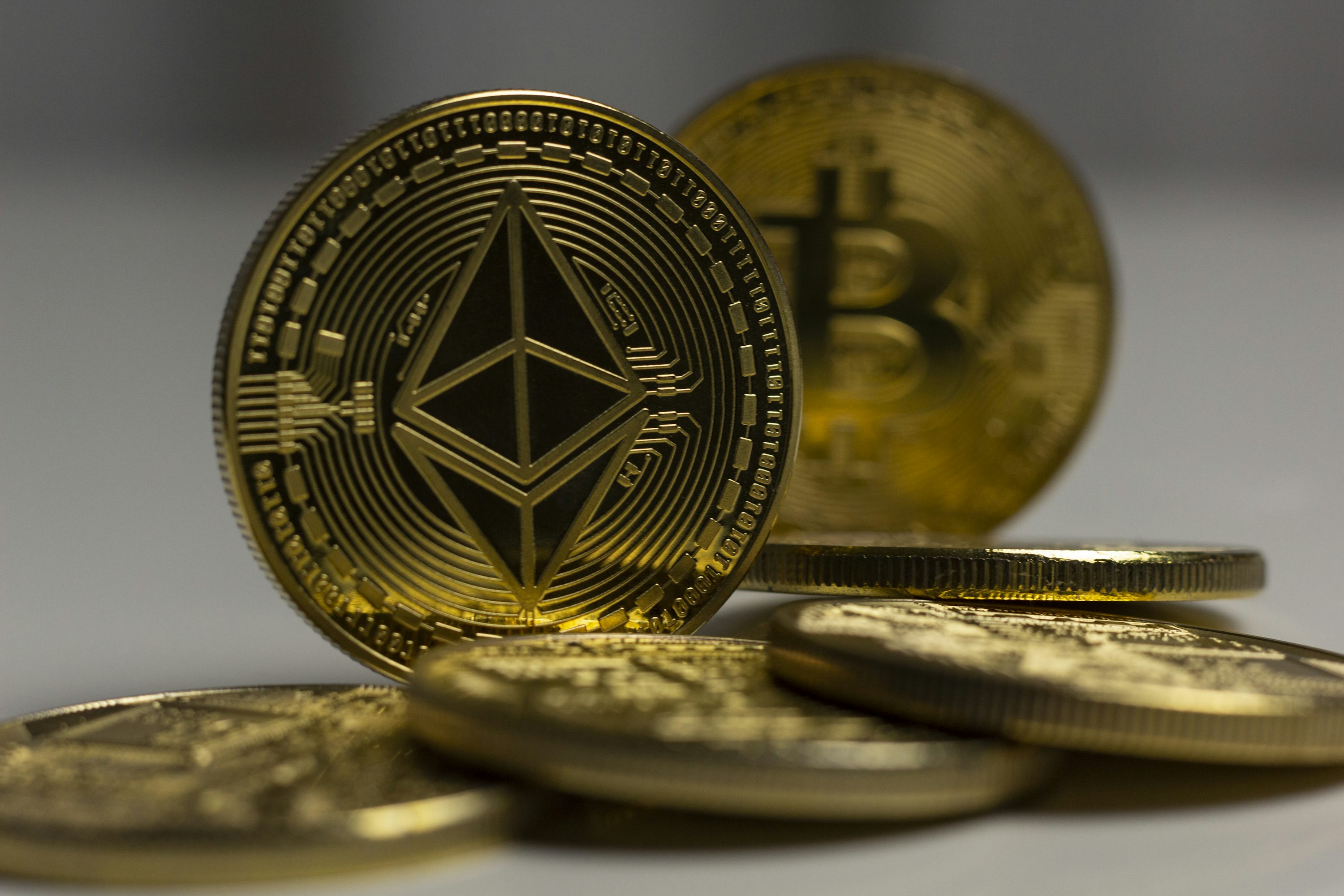
As we approach the end of 2022, it’s safe to say that anyone who has been involved in crypto lately will not miss the departing year, but may be quietly optimistic that 2023 can, at least, not recreate the catastrophes of the twelve months just gone.
Grab your copy of our latest Quarterly Intelligence Report for Q3 2022 before your competitors and stay up-to-date with crucial developments in the Forex and CFD industry!
We can expect, perhaps, a bump in positive thinking as the new year rolls around, and predict that there are several developments and trends likely to emerge or continue throughout 2023.
Token-Gated Verticals
The rise of token-gated communities within new verticals should continue. The web has always been a hub in which niche communities evolve, and with the influence of crypto, richer more visibly demarcated ecosystems and communities can develop.
This is already happening around NFT communities, in which holding an asset is requisite to membership, and pseudo-staking mechanisms encourage loyalty. (True crypto staking is core to the functioning of proof-of-stake blockchains, while NFT staking is usually just a mechanism of locking in your NFT, and your membership of the community, in exchange for rewards).
Keep Reading
Token-gated ecosystems can create their own currencies, deliver airdrops, arrange real-life meet-ups, events and creative collaborations, and, on the whole, build out their own unique online networks.
Add in virtual playgrounds and dedicated marketplaces, such as the Otherside metaverse being constructed by Yuga Labs, or Nike’s .Swoosh web3 platform, and the possibilities become more substantial.
One caveat here is that establishing walled gardens may appear contrary to the idea of accessibility for everyone (which crypto was supposed to facilitate), but the reality is that this kind of application is viable.
The Rebranding Continues
Over the past couple of years, we have already seen a rise in references to the concept of web3, which usefully cuts out explicit mention of crypto or altcoins, and this shift in terminology appears likely to continue.
Where, up until recently, we have talked about NFTs, newcomers to the space, particularly big-name traditional brands and migrants from web2, may start to refer instead to digital collectibles or something similar. The most conspicuous recent example of this is Reddit, whose NFTs are called Collectible Avatars.
Over time, we may simply be left talking about Bitcoin (which will continue to stand distinct as the primary and most credible new form of money), web3 (which equates to other, smart-contract oriented, consumer uses of fungible
Fungible
Fungibility is a term that describes how interchangeable a certain asset is with other assets of the same kind.If an asset is fungible, one unit of that asset is interchangeable with another unit of that asset. Of note, fungibility differs from liquidity. A good is said to be liquid if it can be easily exchanged for money or another good. However, a good is fungible if one unit of the good is substantially equivalent to another unit of the same good of the same quality at the same time and place.By this analog, money is considered to be fungible. For example, one $20 banknote is interchangeable with any other authentic banknote like it.It is also interchangeable with two $10 banknotes, or twenty $1 banknotes, or any other combination of banknotes and coins adding up to $20. Fungible Versus LiquidSimilarly, different issues of a government bond are also fungible, which may have been issued at different times. This is only if these issues carry precisely the same rights and any of them is equally acceptable in settlement of a trade.Fungibility does not imply liquidity, and vice versa. Certain commodities such as diamonds for example can be readily bought and sold. However, while the trade is liquid, individual diamonds are unique and not interchangeable. Cryptocurrencies are often considered to be fungible assets, as one coin is equivalent to another. However, a notable exception occurred after a major breach in Japanese exchange Coincheck, during which token developers for cryptocurrency NEM added a special flag to hacked coins to indicate they are not to be traded or used.
Fungibility is a term that describes how interchangeable a certain asset is with other assets of the same kind.If an asset is fungible, one unit of that asset is interchangeable with another unit of that asset. Of note, fungibility differs from liquidity. A good is said to be liquid if it can be easily exchanged for money or another good. However, a good is fungible if one unit of the good is substantially equivalent to another unit of the same good of the same quality at the same time and place.By this analog, money is considered to be fungible. For example, one $20 banknote is interchangeable with any other authentic banknote like it.It is also interchangeable with two $10 banknotes, or twenty $1 banknotes, or any other combination of banknotes and coins adding up to $20. Fungible Versus LiquidSimilarly, different issues of a government bond are also fungible, which may have been issued at different times. This is only if these issues carry precisely the same rights and any of them is equally acceptable in settlement of a trade.Fungibility does not imply liquidity, and vice versa. Certain commodities such as diamonds for example can be readily bought and sold. However, while the trade is liquid, individual diamonds are unique and not interchangeable. Cryptocurrencies are often considered to be fungible assets, as one coin is equivalent to another. However, a notable exception occurred after a major breach in Japanese exchange Coincheck, during which token developers for cryptocurrency NEM added a special flag to hacked coins to indicate they are not to be traded or used.
Read this Term crypto) and digital collectibles (which refers to non-fungible crypto assets), while the term crypto itself, lacking specificity, is used less and less.
This may especially be the case as newer crypto participants seek to establish a cordon sanitaire between themselves and the now-disgraced FTX, along with other 2022-era crypto collapses, and the general perception that crypto is hazardous, and simple changes in terminology can help to achieve this.
Politics Enters the Chat
Those involved in crypto can tend, on the whole (and to generalize), not to be fond of politics. There are times when crypto discussion comes across as an idealistic escape from the endless political back-and-forth that takes place online, and it stands out because it’s generally rare when influencers and prominent voices take explicitly party-centered positions.
However, post-FTX (meaning when the crypto space has effectively overcome the worst of the fallout, although a full legal disentangling will take a longer time), regulation, which is tied up with politics, will become a bigger issue than ever before.
As such, divides will open up between politicians who take a broadly pro or anti position on crypto (which will equate to being hands-off or heavy-handed), and it’s likely that some crypto advocates and developers may then assume a more active role interacting with political bodies and individuals.
Due to the overall apolitical nature of Bitcoin and other cryptocurrencies, it’s plausible that party baggage needn’t pollute these debates too much. Crypto advocates can then gravitate towards those political actors who express open-mindedness towards crypto, regardless of party lines, and crypto might provide an opportunity for forward-thinking politicians to broaden their bases.
Throughout bear markets is when crypto can quietly focus on issues that don’t immediately grab the public attention. Political wrangling over legal matters and regulation is just such an issue, and as 2023 looks set, possibly, to be a no-man’s land in the crypto markets (past the worst catastrophes of 2022, but not yet positioned for a substantial bull-market surge), it would be no surprise if political matters get thrashed out during this period.
Quiet Mainstream Adoption
This is related to and, to some extent, dependent on regulation
Regulation
Like any other industry with a high net worth, the financial services industry is tightly regulated to help curb illicit behavior and manipulation. Each asset class has its own set of protocols put in place to combat their respective forms of abuse.In the foreign exchange space, regulation is assumed by authorities in multiple jurisdictions, though ultimately lacking a binding international order. Who are the Industry’s Leading Regulators?Regulators such as the UK’s Financial Conduct Authority (FCA), the US’ Securities and Exchange Commission (SEC), Australian Security and Investment Commission (ASIC), and the Cyprus Securities and Exchange Commission (CySEC) are the most widely dealt with authorities in the FX industry.In its most basic sense, regulators help ensure the filing of reports and transmission of data to help police and monitor activity by brokers. Regulators also serve as a countermeasure against market abuse and malpractice by brokers. Brokers adhering to a list of mandated rules are authorized to provide investment activities in a given jurisdiction. By extension, many unauthorized or unregulated entities will also seek to market their services illegally or function as a clone of a regulated operation.Regulators are essential in snuffing out these scam operations as they prevent significant risks for investors.In terms of reporting, brokers are also required to regularly file reports about their clients’ positions to the relevant regulatory authorities. The most-recent regulatory push in the aftermath of the Great Financial Crisis of 2008 has delivered a material shift in the regulatory reporting landscape.Brokers typically outsource the reporting to other companies which are connecting the trade repositories used by regulators to the broker’s systems and are handling this crucial element of compliance.Beyond FX, regulators help reconcile all matters of oversight and are watchdogs for each industry. With ever-changing information and protocols, regulators are always working to promote fairer and more transparent business practices from brokers or exchanges.
Like any other industry with a high net worth, the financial services industry is tightly regulated to help curb illicit behavior and manipulation. Each asset class has its own set of protocols put in place to combat their respective forms of abuse.In the foreign exchange space, regulation is assumed by authorities in multiple jurisdictions, though ultimately lacking a binding international order. Who are the Industry’s Leading Regulators?Regulators such as the UK’s Financial Conduct Authority (FCA), the US’ Securities and Exchange Commission (SEC), Australian Security and Investment Commission (ASIC), and the Cyprus Securities and Exchange Commission (CySEC) are the most widely dealt with authorities in the FX industry.In its most basic sense, regulators help ensure the filing of reports and transmission of data to help police and monitor activity by brokers. Regulators also serve as a countermeasure against market abuse and malpractice by brokers. Brokers adhering to a list of mandated rules are authorized to provide investment activities in a given jurisdiction. By extension, many unauthorized or unregulated entities will also seek to market their services illegally or function as a clone of a regulated operation.Regulators are essential in snuffing out these scam operations as they prevent significant risks for investors.In terms of reporting, brokers are also required to regularly file reports about their clients’ positions to the relevant regulatory authorities. The most-recent regulatory push in the aftermath of the Great Financial Crisis of 2008 has delivered a material shift in the regulatory reporting landscape.Brokers typically outsource the reporting to other companies which are connecting the trade repositories used by regulators to the broker’s systems and are handling this crucial element of compliance.Beyond FX, regulators help reconcile all matters of oversight and are watchdogs for each industry. With ever-changing information and protocols, regulators are always working to promote fairer and more transparent business practices from brokers or exchanges.
Read this Term. As, recovering from the bear market washout, the crypto pieces start slotting back together, mainstream entities are unlikely to turn their backs on Bitcoin, web3 or NFTs.
There may not be the kind of overblown fanfare and rampant hype that surrounded interest from mainstream entities in 2021 and parts of 2022, but positions will be taken, and the trend towards crypto adoption and integration should continue, albeit in, for now at least, a relatively inconspicuous manner.
Additionally, we should be prepared, though, looking further ahead, for the likelihood that a period of relative calm and quiet manoeuvring tends to set the stage for future exuberance.
As we approach the end of 2022, it’s safe to say that anyone who has been involved in crypto lately will not miss the departing year, but may be quietly optimistic that 2023 can, at least, not recreate the catastrophes of the twelve months just gone.
We can expect, perhaps, a bump in positive thinking as the new year rolls around, and predict that there are several developments and trends likely to emerge or continue throughout 2023.
Grab your copy of our latest Quarterly Intelligence Report for Q3 2022 before your competitors and stay up-to-date with crucial developments in the Forex and CFD industry!
Token-Gated Verticals
The rise of token-gated communities within new verticals should continue. The web has always been a hub in which niche communities evolve, and with the influence of crypto, richer more visibly demarcated ecosystems and communities can develop.
This is already happening around NFT communities, in which holding an asset is requisite to membership, and pseudo-staking mechanisms encourage loyalty. (True crypto staking is core to the functioning of proof-of-stake blockchains, while NFT staking is usually just a mechanism of locking in your NFT, and your membership of the community, in exchange for rewards).
Keep Reading
Token-gated ecosystems can create their own currencies, deliver airdrops, arrange real-life meet-ups, events and creative collaborations, and, on the whole, build out their own unique online networks.
Add in virtual playgrounds and dedicated marketplaces, such as the Otherside metaverse being constructed by Yuga Labs, or Nike’s .Swoosh web3 platform, and the possibilities become more substantial.
One caveat here is that establishing walled gardens may appear contrary to the idea of accessibility for everyone (which crypto was supposed to facilitate), but the reality is that this kind of application is viable.
The Rebranding Continues
Over the past couple of years, we have already seen a rise in references to the concept of web3, which usefully cuts out explicit mention of crypto or altcoins, and this shift in terminology appears likely to continue.
Where, up until recently, we have talked about NFTs, newcomers to the space, particularly big-name traditional brands and migrants from web2, may start to refer instead to digital collectibles or something similar. The most conspicuous recent example of this is Reddit, whose NFTs are called Collectible Avatars.
Over time, we may simply be left talking about Bitcoin (which will continue to stand distinct as the primary and most credible new form of money), web3 (which equates to other, smart-contract oriented, consumer uses of fungible
Fungible
Fungibility is a term that describes how interchangeable a certain asset is with other assets of the same kind.If an asset is fungible, one unit of that asset is interchangeable with another unit of that asset. Of note, fungibility differs from liquidity. A good is said to be liquid if it can be easily exchanged for money or another good. However, a good is fungible if one unit of the good is substantially equivalent to another unit of the same good of the same quality at the same time and place.By this analog, money is considered to be fungible. For example, one $20 banknote is interchangeable with any other authentic banknote like it.It is also interchangeable with two $10 banknotes, or twenty $1 banknotes, or any other combination of banknotes and coins adding up to $20. Fungible Versus LiquidSimilarly, different issues of a government bond are also fungible, which may have been issued at different times. This is only if these issues carry precisely the same rights and any of them is equally acceptable in settlement of a trade.Fungibility does not imply liquidity, and vice versa. Certain commodities such as diamonds for example can be readily bought and sold. However, while the trade is liquid, individual diamonds are unique and not interchangeable. Cryptocurrencies are often considered to be fungible assets, as one coin is equivalent to another. However, a notable exception occurred after a major breach in Japanese exchange Coincheck, during which token developers for cryptocurrency NEM added a special flag to hacked coins to indicate they are not to be traded or used.
Fungibility is a term that describes how interchangeable a certain asset is with other assets of the same kind.If an asset is fungible, one unit of that asset is interchangeable with another unit of that asset. Of note, fungibility differs from liquidity. A good is said to be liquid if it can be easily exchanged for money or another good. However, a good is fungible if one unit of the good is substantially equivalent to another unit of the same good of the same quality at the same time and place.By this analog, money is considered to be fungible. For example, one $20 banknote is interchangeable with any other authentic banknote like it.It is also interchangeable with two $10 banknotes, or twenty $1 banknotes, or any other combination of banknotes and coins adding up to $20. Fungible Versus LiquidSimilarly, different issues of a government bond are also fungible, which may have been issued at different times. This is only if these issues carry precisely the same rights and any of them is equally acceptable in settlement of a trade.Fungibility does not imply liquidity, and vice versa. Certain commodities such as diamonds for example can be readily bought and sold. However, while the trade is liquid, individual diamonds are unique and not interchangeable. Cryptocurrencies are often considered to be fungible assets, as one coin is equivalent to another. However, a notable exception occurred after a major breach in Japanese exchange Coincheck, during which token developers for cryptocurrency NEM added a special flag to hacked coins to indicate they are not to be traded or used.
Read this Term crypto) and digital collectibles (which refers to non-fungible crypto assets), while the term crypto itself, lacking specificity, is used less and less.
This may especially be the case as newer crypto participants seek to establish a cordon sanitaire between themselves and the now-disgraced FTX, along with other 2022-era crypto collapses, and the general perception that crypto is hazardous, and simple changes in terminology can help to achieve this.
Politics Enters the Chat
Those involved in crypto can tend, on the whole (and to generalize), not to be fond of politics. There are times when crypto discussion comes across as an idealistic escape from the endless political back-and-forth that takes place online, and it stands out because it’s generally rare when influencers and prominent voices take explicitly party-centered positions.
However, post-FTX (meaning when the crypto space has effectively overcome the worst of the fallout, although a full legal disentangling will take a longer time), regulation, which is tied up with politics, will become a bigger issue than ever before.
As such, divides will open up between politicians who take a broadly pro or anti position on crypto (which will equate to being hands-off or heavy-handed), and it’s likely that some crypto advocates and developers may then assume a more active role interacting with political bodies and individuals.
Due to the overall apolitical nature of Bitcoin and other cryptocurrencies, it’s plausible that party baggage needn’t pollute these debates too much. Crypto advocates can then gravitate towards those political actors who express open-mindedness towards crypto, regardless of party lines, and crypto might provide an opportunity for forward-thinking politicians to broaden their bases.
Throughout bear markets is when crypto can quietly focus on issues that don’t immediately grab the public attention. Political wrangling over legal matters and regulation is just such an issue, and as 2023 looks set, possibly, to be a no-man’s land in the crypto markets (past the worst catastrophes of 2022, but not yet positioned for a substantial bull-market surge), it would be no surprise if political matters get thrashed out during this period.
Quiet Mainstream Adoption
This is related to and, to some extent, dependent on regulation
Regulation
Like any other industry with a high net worth, the financial services industry is tightly regulated to help curb illicit behavior and manipulation. Each asset class has its own set of protocols put in place to combat their respective forms of abuse.In the foreign exchange space, regulation is assumed by authorities in multiple jurisdictions, though ultimately lacking a binding international order. Who are the Industry’s Leading Regulators?Regulators such as the UK’s Financial Conduct Authority (FCA), the US’ Securities and Exchange Commission (SEC), Australian Security and Investment Commission (ASIC), and the Cyprus Securities and Exchange Commission (CySEC) are the most widely dealt with authorities in the FX industry.In its most basic sense, regulators help ensure the filing of reports and transmission of data to help police and monitor activity by brokers. Regulators also serve as a countermeasure against market abuse and malpractice by brokers. Brokers adhering to a list of mandated rules are authorized to provide investment activities in a given jurisdiction. By extension, many unauthorized or unregulated entities will also seek to market their services illegally or function as a clone of a regulated operation.Regulators are essential in snuffing out these scam operations as they prevent significant risks for investors.In terms of reporting, brokers are also required to regularly file reports about their clients’ positions to the relevant regulatory authorities. The most-recent regulatory push in the aftermath of the Great Financial Crisis of 2008 has delivered a material shift in the regulatory reporting landscape.Brokers typically outsource the reporting to other companies which are connecting the trade repositories used by regulators to the broker’s systems and are handling this crucial element of compliance.Beyond FX, regulators help reconcile all matters of oversight and are watchdogs for each industry. With ever-changing information and protocols, regulators are always working to promote fairer and more transparent business practices from brokers or exchanges.
Like any other industry with a high net worth, the financial services industry is tightly regulated to help curb illicit behavior and manipulation. Each asset class has its own set of protocols put in place to combat their respective forms of abuse.In the foreign exchange space, regulation is assumed by authorities in multiple jurisdictions, though ultimately lacking a binding international order. Who are the Industry’s Leading Regulators?Regulators such as the UK’s Financial Conduct Authority (FCA), the US’ Securities and Exchange Commission (SEC), Australian Security and Investment Commission (ASIC), and the Cyprus Securities and Exchange Commission (CySEC) are the most widely dealt with authorities in the FX industry.In its most basic sense, regulators help ensure the filing of reports and transmission of data to help police and monitor activity by brokers. Regulators also serve as a countermeasure against market abuse and malpractice by brokers. Brokers adhering to a list of mandated rules are authorized to provide investment activities in a given jurisdiction. By extension, many unauthorized or unregulated entities will also seek to market their services illegally or function as a clone of a regulated operation.Regulators are essential in snuffing out these scam operations as they prevent significant risks for investors.In terms of reporting, brokers are also required to regularly file reports about their clients’ positions to the relevant regulatory authorities. The most-recent regulatory push in the aftermath of the Great Financial Crisis of 2008 has delivered a material shift in the regulatory reporting landscape.Brokers typically outsource the reporting to other companies which are connecting the trade repositories used by regulators to the broker’s systems and are handling this crucial element of compliance.Beyond FX, regulators help reconcile all matters of oversight and are watchdogs for each industry. With ever-changing information and protocols, regulators are always working to promote fairer and more transparent business practices from brokers or exchanges.
Read this Term. As, recovering from the bear market washout, the crypto pieces start slotting back together, mainstream entities are unlikely to turn their backs on Bitcoin, web3 or NFTs.
There may not be the kind of overblown fanfare and rampant hype that surrounded interest from mainstream entities in 2021 and parts of 2022, but positions will be taken, and the trend towards crypto adoption and integration should continue, albeit in, for now at least, a relatively inconspicuous manner.
Additionally, we should be prepared, though, looking further ahead, for the likelihood that a period of relative calm and quiet manoeuvring tends to set the stage for future exuberance.
Source link