Computer gaming has gone through distinct phases taking in various business models, from arcade gaming to home consoles and gaming PCs, all the way through to modern mobile games.
Take Advantage of the Biggest Financial Event in London. This year we have expanded to new verticals in Online Trading, Fintech, Digital Assets, Blockchain, and Payments.
Accompanying these progressions have been changes in payment models, from paying for each play in an arcade, to one-off upfront payments for cartridges, to the world of free mobile gaming with payments
Payments
One of the bases of mediums of exchange in the modern world, a payment constitutes the transfer of a legal currency or equivalent from one party in exchange for goods or services to another entity. The payments industry has become a fixture of modern commerce, though the players involved and means of exchange have dramatically shifted over time.In particular, a party making a payment is referred to as a payer, with the payee reflecting the individual or entity receiving the payment. Most commonly the basis of exchange involves fiat currency or legal tender, be it in the form of cash, credit or bank transfers, debit, or checks. While typically associated with cash transfers, payments can also be made in anything of perceived value, be it stock or bartering – though this is far more limited today than it has been in the past.The Largest Players in the Payments IndustryFor most individuals, the payments industry is dominated currently by card companies such as Visa or Mastercard, which facilitate the use of credit or debit expenditures. More recently, this industry has seen the rise of Peer-to-Peer (P2P) payments services, which have gained tremendous traction in Europe, the United States, and Asia, among other continents.One of the biggest parameters for payments is timing, which looms as a crucial element for execution. By this metric, consumer demand incentivizes technology that prioritizes the fastest payment execution.This can help explain the preference for debit and credit payments overtaking check or money orders, which in previous decades were much more commonly utilized. A multi-billion-dollar industry, the payments space has seen some of the most innovation and advances in recent years as companies look to push contactless technology with faster execution times.
One of the bases of mediums of exchange in the modern world, a payment constitutes the transfer of a legal currency or equivalent from one party in exchange for goods or services to another entity. The payments industry has become a fixture of modern commerce, though the players involved and means of exchange have dramatically shifted over time.In particular, a party making a payment is referred to as a payer, with the payee reflecting the individual or entity receiving the payment. Most commonly the basis of exchange involves fiat currency or legal tender, be it in the form of cash, credit or bank transfers, debit, or checks. While typically associated with cash transfers, payments can also be made in anything of perceived value, be it stock or bartering – though this is far more limited today than it has been in the past.The Largest Players in the Payments IndustryFor most individuals, the payments industry is dominated currently by card companies such as Visa or Mastercard, which facilitate the use of credit or debit expenditures. More recently, this industry has seen the rise of Peer-to-Peer (P2P) payments services, which have gained tremendous traction in Europe, the United States, and Asia, among other continents.One of the biggest parameters for payments is timing, which looms as a crucial element for execution. By this metric, consumer demand incentivizes technology that prioritizes the fastest payment execution.This can help explain the preference for debit and credit payments overtaking check or money orders, which in previous decades were much more commonly utilized. A multi-billion-dollar industry, the payments space has seen some of the most innovation and advances in recent years as companies look to push contactless technology with faster execution times.
Read this Term for in-game upgrades.
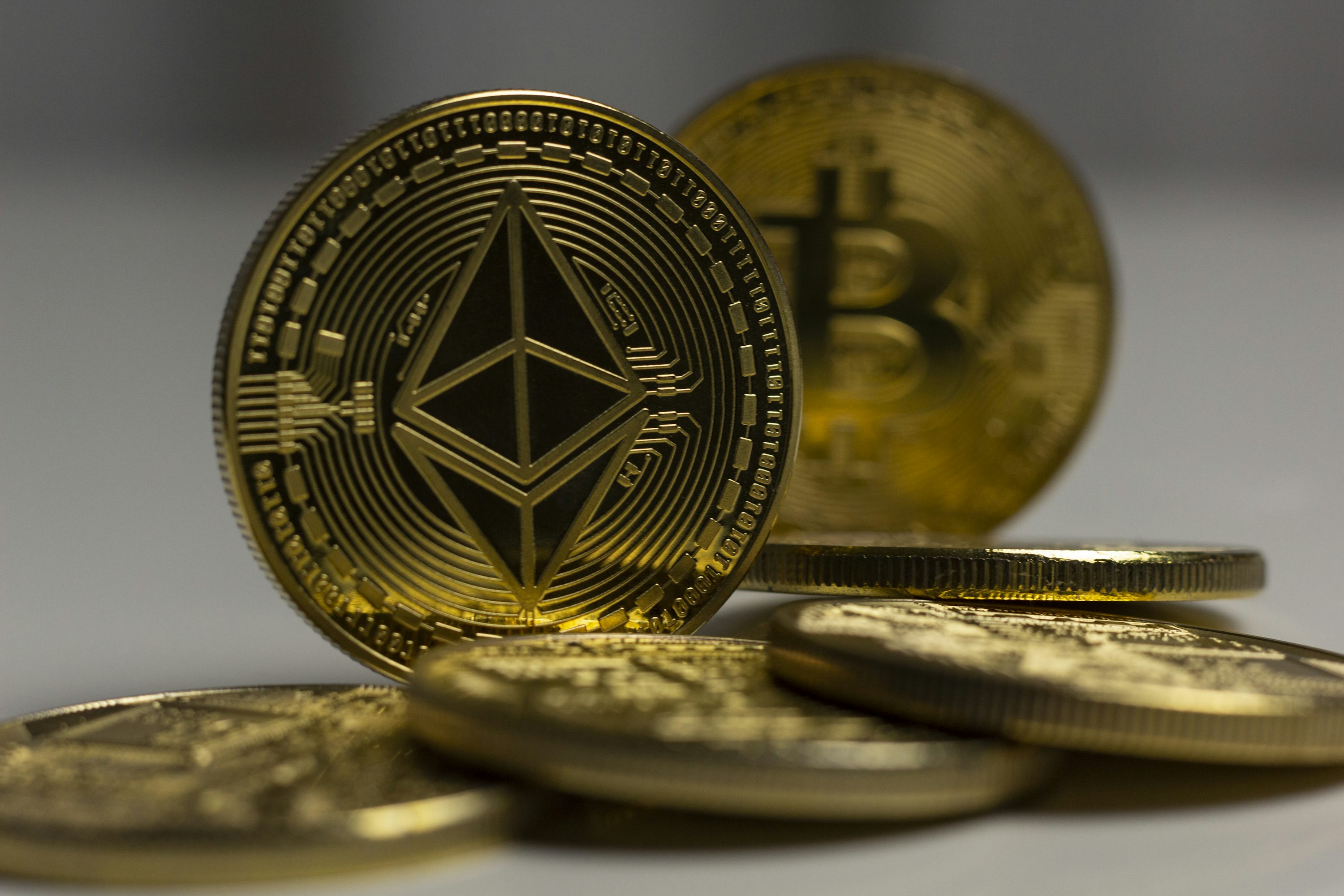
Currently, we see the gaming industry and cryptocurrencies drawing closer together and intersecting. Cast back to Bitcoin’s earliest days, and this might have seemed unlikely, what with Bitcoin advocates being most vocally concerned with monetary issues, and significantly more likely to bring up Austrian economics than Candy Crush.
In fact, that’s still the case, as discussions around blockchain technology as it relates to gaming are primarily occurring away from Bitcoin and in new quarters of the cryptocurrency space that have branched off and expanded, and which lend themselves more apparently to uses within gaming environments.
Keep Reading
This meeting of games and crypto has accelerated with the recent explosion of interest in NFTs, along with the emergence of the web3 narrative, within which crypto has undergone something akin to a rebranding, and blockchains are posited as the architecture upon which the next iteration of the web, taking in gaming, will be constructed.
There is also a crossover with the metaverse narrative, as gaming environments might conceivably become zones within a wider metaverse, while metaverse projects incorporate gaming dynamics in order to hook users and provide entertainment.
An example of the latter, a potentially game-like metaverse, is Otherside, which has evolved out of the Bored Ape Yacht Club NFT collection, and whose developers appear to be ensuring that users are not simply present in a virtual world, but that they have a good time while they are there.
Axie Infinity and P2E
Where crypto enters the gaming equation, we see the development of play-to-earn (P2E) gaming, which allows players to earn crypto tokens by playing the games in question.
The leading product in this market has been Axie Infinity, which gained hugely in exposure during the most recent crypto bull run, and from which many participants have earned considerable profits. However, Axie token prices have subsequently collapsed, and the bear market has revealed flaws in its system.
Among the criticisms of Axie are not only that its model was unsustainable, or even that it operated as a Ponzi scheme
Ponzi Scheme
A Ponzi scheme is a scam that looks to lure investors, ultimately paying profits to earlier investors with funds from more later investors.This form of fraud tricks victims into believing that products are instead generated from product sales or other means. In actuality, most investors are completely oblivious to the actual origin of incoming funds.One of the central attributes of a Ponzi scheme is the necessity of its ongoing nature, which is dependent on a steady flow of new contributions and funds. This can unravel quickly should investors request or demand repayment or lose faith in whatever assets they are supposed to own.While earlier episodes of this scam were carried out historically, the name Ponzi scheme is associated with Charles Ponzi in the 1920s.His original scam was based on the legitimate arbitrage of international reply coupons for postage stamps. This eventually gave way to diverting new investors’ money to make payments to earlier investors and to himself.How to Identify Ponzi Schemes?Like any scam, Ponzi schemes follow a few basic trends that investors should be mindful of. A healthy amount of skepticism in regards to investing should always be present, which should help identify ways that scams look to market themselves.For example, Ponzi schemes almost always require an initial investment and promise above average returns. This also includes purposely vague or arbitrary terminology to help confuse more novice investors. This fraud is riddled with mentions of “high-yield investment programs”, “offshore investment”, or “guaranteed returns”.Any sort of investment opportunity should always be analyzed and researched. In the modern era, many tools are available to identify scams or fraudulent operations.Regulators in most jurisdictions are constantly policing against these forms of market abuse and it is important to check these registers before actually investing in dubious opportunities.
A Ponzi scheme is a scam that looks to lure investors, ultimately paying profits to earlier investors with funds from more later investors.This form of fraud tricks victims into believing that products are instead generated from product sales or other means. In actuality, most investors are completely oblivious to the actual origin of incoming funds.One of the central attributes of a Ponzi scheme is the necessity of its ongoing nature, which is dependent on a steady flow of new contributions and funds. This can unravel quickly should investors request or demand repayment or lose faith in whatever assets they are supposed to own.While earlier episodes of this scam were carried out historically, the name Ponzi scheme is associated with Charles Ponzi in the 1920s.His original scam was based on the legitimate arbitrage of international reply coupons for postage stamps. This eventually gave way to diverting new investors’ money to make payments to earlier investors and to himself.How to Identify Ponzi Schemes?Like any scam, Ponzi schemes follow a few basic trends that investors should be mindful of. A healthy amount of skepticism in regards to investing should always be present, which should help identify ways that scams look to market themselves.For example, Ponzi schemes almost always require an initial investment and promise above average returns. This also includes purposely vague or arbitrary terminology to help confuse more novice investors. This fraud is riddled with mentions of “high-yield investment programs”, “offshore investment”, or “guaranteed returns”.Any sort of investment opportunity should always be analyzed and researched. In the modern era, many tools are available to identify scams or fraudulent operations.Regulators in most jurisdictions are constantly policing against these forms of market abuse and it is important to check these registers before actually investing in dubious opportunities.
Read this Term, but also that the game itself simply wasn’t enjoyable to play, and only gained traction because of the user earning potential.
Perhaps as a reaction to complaints that play-to-earn blockchain gaming is nothing more than a crypto profit grind, with the mundane basics of a game strapped on, the play-to-earn label has been superseded by play-and-earn.
This new tag implies that the gaming experience is primary while potential crypto earnings are an added bonus, but it remains to be seen whether this change is anything other than just nominal.
Recently, we have seen the emergence of a dynamic called move-to-earn (M2E), which utilizes NFTs and crypto, and allows participants to earn tokens through exercising. This is creating what could become a gamified, blockchain-based fitness and lifestyle sector, exemplified through projects such as STEPN and Step App.
DigiDaigaku and F2O
Recently, there has been a significant new development, with the launch of a gaming/NFT project called DigiDaigaku, and the F2O model around which it is centered. F2O means free-to-own, and it’s a departure from previous tie-ups between crypto and gaming.
DigiDaigaku is a work-in-progress that was launched in August by Limit Break, which itself is a new web3 gaming firm established by Gabriel Leydon and Halbert Nakagawa. Leydon and Nakagawa are two of the co-founders of Machine Zone (now owned by mobile technology company AppLovin), which is a leading company in the mobile gaming arena.
The F2O model being pioneered through Limit Break and DigiDaigaku lays the foundation for a new type of gaming economy, which is being proposed as an improvement on both free-to-play mobile games, and the play-to-earn models that sell NFTs upfront.
DigiDaigaku, which features the kind of anime-inspired aesthetic that has been a key NFT trend this year, minted its 2,022 NFTs for free, and has subsequently seen their secondary market value surge despite currently subdued wider conditions.
Proposed DigiDaigaku and F2O concepts are that the freely delivered NFT assets will act as generators creating further NFTs for in-game use, that initial holders become invested in expanding a project’s reach but are not motivated to quickly recoup any buy-in costs, and that app stores can be bypassed as developers, NFT holders and players form a flexible network that requires no middlemen.
It should be noted that firmly laid out mechanics of the F2O gaming model are not available and that the DigiDaigaku project is lacking in concrete details. Also, although not released as gaming projects, freely distributed NFTs are nothing new, going back to CryptoPunks in 2017, and including this year’s surprise hit collection, Goblintown.
However, the founders of Limit Break and DigiDaigaku are experienced, driven and highly competent, and, at the very least, look set to inject valuable creative disruption into the worlds of both gaming and NFTs.
Computer gaming has gone through distinct phases taking in various business models, from arcade gaming to home consoles and gaming PCs, all the way through to modern mobile games.
Accompanying these progressions have been changes in payment models, from paying for each play in an arcade, to one-off upfront payments for cartridges, to the world of free mobile gaming with payments
Payments
One of the bases of mediums of exchange in the modern world, a payment constitutes the transfer of a legal currency or equivalent from one party in exchange for goods or services to another entity. The payments industry has become a fixture of modern commerce, though the players involved and means of exchange have dramatically shifted over time.In particular, a party making a payment is referred to as a payer, with the payee reflecting the individual or entity receiving the payment. Most commonly the basis of exchange involves fiat currency or legal tender, be it in the form of cash, credit or bank transfers, debit, or checks. While typically associated with cash transfers, payments can also be made in anything of perceived value, be it stock or bartering – though this is far more limited today than it has been in the past.The Largest Players in the Payments IndustryFor most individuals, the payments industry is dominated currently by card companies such as Visa or Mastercard, which facilitate the use of credit or debit expenditures. More recently, this industry has seen the rise of Peer-to-Peer (P2P) payments services, which have gained tremendous traction in Europe, the United States, and Asia, among other continents.One of the biggest parameters for payments is timing, which looms as a crucial element for execution. By this metric, consumer demand incentivizes technology that prioritizes the fastest payment execution.This can help explain the preference for debit and credit payments overtaking check or money orders, which in previous decades were much more commonly utilized. A multi-billion-dollar industry, the payments space has seen some of the most innovation and advances in recent years as companies look to push contactless technology with faster execution times.
One of the bases of mediums of exchange in the modern world, a payment constitutes the transfer of a legal currency or equivalent from one party in exchange for goods or services to another entity. The payments industry has become a fixture of modern commerce, though the players involved and means of exchange have dramatically shifted over time.In particular, a party making a payment is referred to as a payer, with the payee reflecting the individual or entity receiving the payment. Most commonly the basis of exchange involves fiat currency or legal tender, be it in the form of cash, credit or bank transfers, debit, or checks. While typically associated with cash transfers, payments can also be made in anything of perceived value, be it stock or bartering – though this is far more limited today than it has been in the past.The Largest Players in the Payments IndustryFor most individuals, the payments industry is dominated currently by card companies such as Visa or Mastercard, which facilitate the use of credit or debit expenditures. More recently, this industry has seen the rise of Peer-to-Peer (P2P) payments services, which have gained tremendous traction in Europe, the United States, and Asia, among other continents.One of the biggest parameters for payments is timing, which looms as a crucial element for execution. By this metric, consumer demand incentivizes technology that prioritizes the fastest payment execution.This can help explain the preference for debit and credit payments overtaking check or money orders, which in previous decades were much more commonly utilized. A multi-billion-dollar industry, the payments space has seen some of the most innovation and advances in recent years as companies look to push contactless technology with faster execution times.
Read this Term for in-game upgrades.
Take Advantage of the Biggest Financial Event in London. This year we have expanded to new verticals in Online Trading, Fintech, Digital Assets, Blockchain, and Payments.
Currently, we see the gaming industry and cryptocurrencies drawing closer together and intersecting. Cast back to Bitcoin’s earliest days, and this might have seemed unlikely, what with Bitcoin advocates being most vocally concerned with monetary issues, and significantly more likely to bring up Austrian economics than Candy Crush.
In fact, that’s still the case, as discussions around blockchain technology as it relates to gaming are primarily occurring away from Bitcoin and in new quarters of the cryptocurrency space that have branched off and expanded, and which lend themselves more apparently to uses within gaming environments.
Keep Reading
This meeting of games and crypto has accelerated with the recent explosion of interest in NFTs, along with the emergence of the web3 narrative, within which crypto has undergone something akin to a rebranding, and blockchains are posited as the architecture upon which the next iteration of the web, taking in gaming, will be constructed.
There is also a crossover with the metaverse narrative, as gaming environments might conceivably become zones within a wider metaverse, while metaverse projects incorporate gaming dynamics in order to hook users and provide entertainment.
An example of the latter, a potentially game-like metaverse, is Otherside, which has evolved out of the Bored Ape Yacht Club NFT collection, and whose developers appear to be ensuring that users are not simply present in a virtual world, but that they have a good time while they are there.
Axie Infinity and P2E
Where crypto enters the gaming equation, we see the development of play-to-earn (P2E) gaming, which allows players to earn crypto tokens by playing the games in question.
The leading product in this market has been Axie Infinity, which gained hugely in exposure during the most recent crypto bull run, and from which many participants have earned considerable profits. However, Axie token prices have subsequently collapsed, and the bear market has revealed flaws in its system.
Among the criticisms of Axie are not only that its model was unsustainable, or even that it operated as a Ponzi scheme
Ponzi Scheme
A Ponzi scheme is a scam that looks to lure investors, ultimately paying profits to earlier investors with funds from more later investors.This form of fraud tricks victims into believing that products are instead generated from product sales or other means. In actuality, most investors are completely oblivious to the actual origin of incoming funds.One of the central attributes of a Ponzi scheme is the necessity of its ongoing nature, which is dependent on a steady flow of new contributions and funds. This can unravel quickly should investors request or demand repayment or lose faith in whatever assets they are supposed to own.While earlier episodes of this scam were carried out historically, the name Ponzi scheme is associated with Charles Ponzi in the 1920s.His original scam was based on the legitimate arbitrage of international reply coupons for postage stamps. This eventually gave way to diverting new investors’ money to make payments to earlier investors and to himself.How to Identify Ponzi Schemes?Like any scam, Ponzi schemes follow a few basic trends that investors should be mindful of. A healthy amount of skepticism in regards to investing should always be present, which should help identify ways that scams look to market themselves.For example, Ponzi schemes almost always require an initial investment and promise above average returns. This also includes purposely vague or arbitrary terminology to help confuse more novice investors. This fraud is riddled with mentions of “high-yield investment programs”, “offshore investment”, or “guaranteed returns”.Any sort of investment opportunity should always be analyzed and researched. In the modern era, many tools are available to identify scams or fraudulent operations.Regulators in most jurisdictions are constantly policing against these forms of market abuse and it is important to check these registers before actually investing in dubious opportunities.
A Ponzi scheme is a scam that looks to lure investors, ultimately paying profits to earlier investors with funds from more later investors.This form of fraud tricks victims into believing that products are instead generated from product sales or other means. In actuality, most investors are completely oblivious to the actual origin of incoming funds.One of the central attributes of a Ponzi scheme is the necessity of its ongoing nature, which is dependent on a steady flow of new contributions and funds. This can unravel quickly should investors request or demand repayment or lose faith in whatever assets they are supposed to own.While earlier episodes of this scam were carried out historically, the name Ponzi scheme is associated with Charles Ponzi in the 1920s.His original scam was based on the legitimate arbitrage of international reply coupons for postage stamps. This eventually gave way to diverting new investors’ money to make payments to earlier investors and to himself.How to Identify Ponzi Schemes?Like any scam, Ponzi schemes follow a few basic trends that investors should be mindful of. A healthy amount of skepticism in regards to investing should always be present, which should help identify ways that scams look to market themselves.For example, Ponzi schemes almost always require an initial investment and promise above average returns. This also includes purposely vague or arbitrary terminology to help confuse more novice investors. This fraud is riddled with mentions of “high-yield investment programs”, “offshore investment”, or “guaranteed returns”.Any sort of investment opportunity should always be analyzed and researched. In the modern era, many tools are available to identify scams or fraudulent operations.Regulators in most jurisdictions are constantly policing against these forms of market abuse and it is important to check these registers before actually investing in dubious opportunities.
Read this Term, but also that the game itself simply wasn’t enjoyable to play, and only gained traction because of the user earning potential.
Perhaps as a reaction to complaints that play-to-earn blockchain gaming is nothing more than a crypto profit grind, with the mundane basics of a game strapped on, the play-to-earn label has been superseded by play-and-earn.
This new tag implies that the gaming experience is primary while potential crypto earnings are an added bonus, but it remains to be seen whether this change is anything other than just nominal.
Recently, we have seen the emergence of a dynamic called move-to-earn (M2E), which utilizes NFTs and crypto, and allows participants to earn tokens through exercising. This is creating what could become a gamified, blockchain-based fitness and lifestyle sector, exemplified through projects such as STEPN and Step App.
DigiDaigaku and F2O
Recently, there has been a significant new development, with the launch of a gaming/NFT project called DigiDaigaku, and the F2O model around which it is centered. F2O means free-to-own, and it’s a departure from previous tie-ups between crypto and gaming.
DigiDaigaku is a work-in-progress that was launched in August by Limit Break, which itself is a new web3 gaming firm established by Gabriel Leydon and Halbert Nakagawa. Leydon and Nakagawa are two of the co-founders of Machine Zone (now owned by mobile technology company AppLovin), which is a leading company in the mobile gaming arena.
The F2O model being pioneered through Limit Break and DigiDaigaku lays the foundation for a new type of gaming economy, which is being proposed as an improvement on both free-to-play mobile games, and the play-to-earn models that sell NFTs upfront.
DigiDaigaku, which features the kind of anime-inspired aesthetic that has been a key NFT trend this year, minted its 2,022 NFTs for free, and has subsequently seen their secondary market value surge despite currently subdued wider conditions.
Proposed DigiDaigaku and F2O concepts are that the freely delivered NFT assets will act as generators creating further NFTs for in-game use, that initial holders become invested in expanding a project’s reach but are not motivated to quickly recoup any buy-in costs, and that app stores can be bypassed as developers, NFT holders and players form a flexible network that requires no middlemen.
It should be noted that firmly laid out mechanics of the F2O gaming model are not available and that the DigiDaigaku project is lacking in concrete details. Also, although not released as gaming projects, freely distributed NFTs are nothing new, going back to CryptoPunks in 2017, and including this year’s surprise hit collection, Goblintown.
However, the founders of Limit Break and DigiDaigaku are experienced, driven and highly competent, and, at the very least, look set to inject valuable creative disruption into the worlds of both gaming and NFTs.
Source link