Polygon nodes are essential network components, performing tasks related to transaction processing, consensus, security, smart contract execution, block creation, data storage, and network governance. Furthermore, they contribute to the Polygon blockchain’s overall functionality, security, and efficiency. In this guide, we’ll review in-depth what a Polygon node exactly is, the different types, how to run a Polygon RPC node, and if you absolutely have to run a Polygon node when developing on this layer-2 network!
Overview
In today’s article, you’ll first learn what a Polygon node is and how it works. This will help you get up to speed regarding these essential components of the Polygon network.
Next, we’ll focus on how to run a Polygon node. This is where we’ll point out two paths devs can take if they need to access a Polygon node. One requires a serious commitment of resources and time; hence, we’ll refer to it as “the hard way” of running a Polygon node. However, you’ll also learn more about “the easy way” to run a node.
Lastly, you’ll also discover an even better path. As it turns out, you can build all sorts of killer dapps without running a node. This is a more resource-friendly path available to every dapp developer who uses the power of Moralis APIs!

What is a Polygon Node?
A Polygon node is a critical component within the Polygon blockchain ecosystem, formerly known as MATIC. Furthermore, a node on Polygon plays a central role in maintaining the network’s integrity and functionality. Now, to fully understand Polygon nodes, let’s dive into the world of blockchain technology and how nodes function.
In the context of blockchain, a node is like a network participant or a computer that connects to the blockchain network. Nodes are essential for validating transactions, securing the network, and ensuring the ledger’s accuracy. In the Polygon blockchain, Polygon nodes serve these fundamental purposes. Imagine a Polygon node as a worker in a vast office building. Each worker (node) has a specific job: verifying transactions. When someone initiates a transaction on the Polygon blockchain, these workers spring into action. They check the transaction’s details, ensure it’s legitimate, and then record it in the digital ledger.
As an example, think of the Polygon blockchain as a massive online spreadsheet where transactions are added. Every time you send cryptocurrency or interact with a smart contract on the Polygon network, a Polygon node is responsible for making sure your action is valid and updating the spreadsheet accordingly.
Moreover, Polygon nodes contribute to the network’s consensus mechanism. In the Polygon blockchain, they participate in a process called proof-of-stake (PoS), which involves validators being chosen to create new blocks based on the amount of cryptocurrency they lock up as collateral. This mechanism helps secure the network and maintain its smooth operation.
In addition to transaction validation, Polygon nodes store a copy of the entire blockchain’s transaction history. This redundancy ensures that even if one “worker’s” record is lost or damaged, there are many others with the same information, guaranteeing data consistency and network reliability.
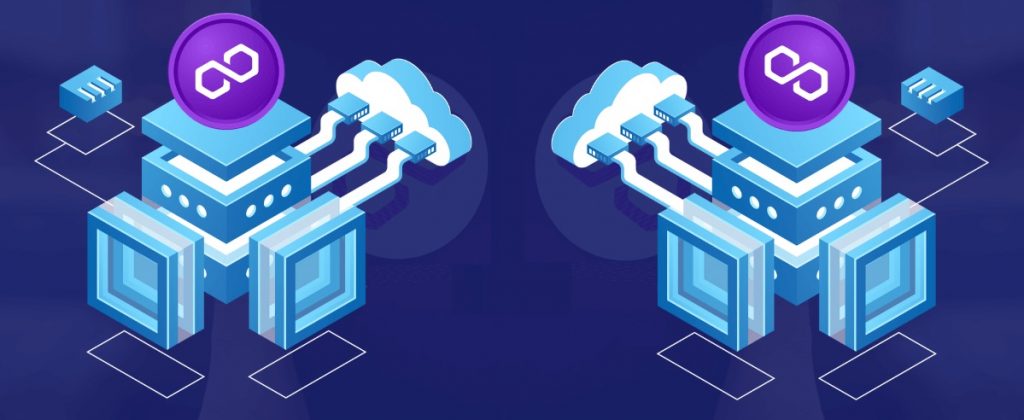
How Does a Polygon Node Work?
Fundamentally, envision a Polygon node as a diligent guardian of the blockchain’s integrity, performing pivotal roles:
Transaction Validation: Whenever a user sends cryptocurrency or engages with a smart contract, a transaction on the Polygon blockchain initiates. So, with every transaction, Polygon nodes become active sentinels. They scrutinize the transaction’s particulars, rigorously verifying its legitimacy and authenticity. If all checks align, the transaction earns its place within the blockchain’s immutable ledger.Consensus Engagement: Within the Polygon blockchain, the PoS consensus mechanism reigns supreme. Polygon nodes actively participate in this mechanism, akin to stakeholders in a digital democracy. Selected nodes are tasked with creating new blocks based on their MATIC stake. This process fortifies the network’s security and ensures equitable transaction processing.Network Harmonization: Polygon nodes operate as the backbone of data dissemination across the network. They uphold a comprehensive record of the blockchain’s transaction history, tirelessly relaying this data to their peer nodes. This redundancy assures all participants a synchronized and harmonious view of the ledger. Thus, it significantly bolsters the blockchain’s resilience and reliability.
From a more technical perspective, a Polygon node functions through a dedicated software application. The latter establishes a vital connection to the Polygon blockchain network and encompasses several pivotal components:
Validator Essence: Validator nodes, constituting the backbone of consensus building, take on the roles of proposing and validating new blocks. Archive Vitality: Archive nodes serve as repositories of extensive historical data, safeguarding past transactions and smart contract states. This proves invaluable for developers and users seeking access to historical blockchain insights.P2P Concord: Polygon nodes engage in peer-to-peer (P2P) communication, facilitating the exchange of transaction data and blockchain intelligence.
How to Run a Polygon Node
When it comes to running a Polygon node, developers have two options. On the one hand, they can decide to commit their time and effort to deploying their own node. Since this path requires physical and software equipment plus continuous maintenance, it is known as “the hard way” of running a Polygon node.
On the other hand, developers can take a much faster and hand-off approach. In that case, they can simply run an RPC node offered by one of the Polygon node providers. Since this path requires just a simple signup and no extra time commitment, it is known as “the easy way” of running Polygon nodes.
You can learn more about each of the two ways in the sections below.
Running a Polygon Node the Hard Way
Unless your project actually requires you to operate a node, we recommend avoiding this path. However, in case you need or really want to run a Polygon node the hard way, you have several options. You can run a full node or an Erigon node. Plus, you can also become a Polygon network validator.
Each of these options has its own requirements and specifics. Fortunately, you can review all the details in Polygon’s official documentation:
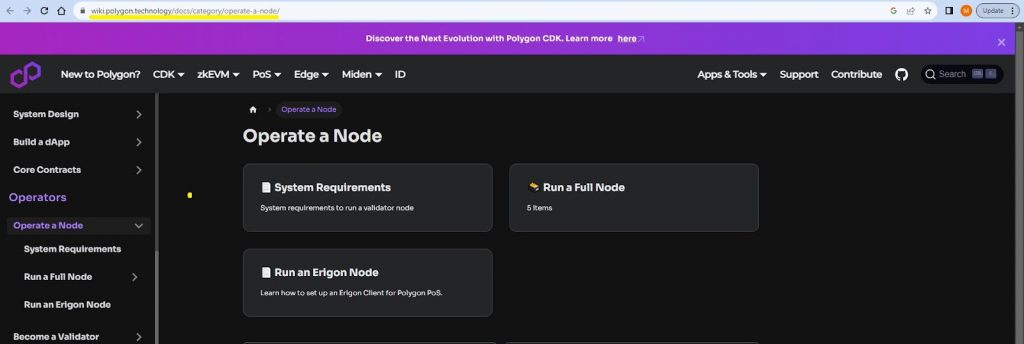
Recommended system requirements for running Polygon nodes are as follows:
RAM: 64 GBCPU: 16-coreStorage: 5 TB SSDBandwidth: 1 Gbit/s
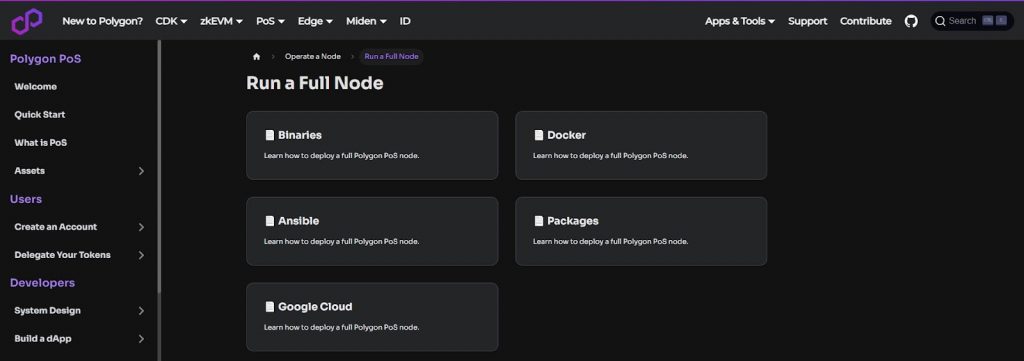
Plus, if you decide to run a full Polygon node, you have several different options to choose from:
Running a Polygon RPC Node the Easy Way
If you’re considering deploying smart contracts on the Polygon blockchain, you’ll need access to a Polygon node. Fortunately, there’s no need to take the above-outlined route. Instead, you can opt for a hassle-free method.
So, rather than navigating the complexities, you can rely on a trusted Polygon RPC node provider. That said, there are numerous providers available, making it crucial to choose wisely.
To simplify the process, we’ve compiled a curated list of dependable node providers. This makes running a Polygon RPC node or nodes on other reputable EVM-compatible chains easy. Here’s how to get started:
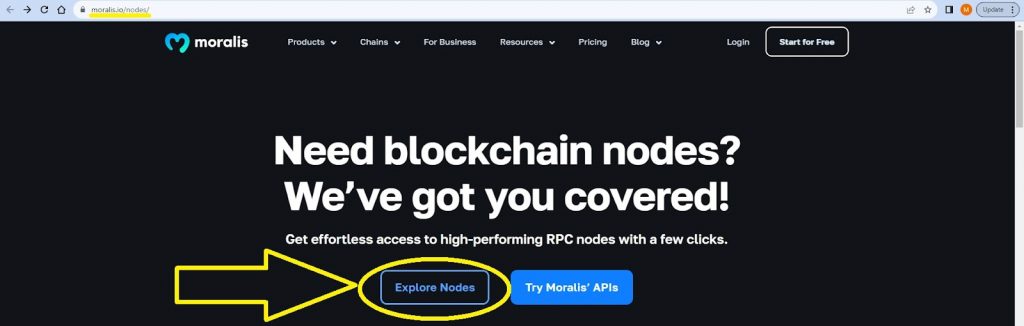
Head to Moralis’ Blockchain Nodes page. There, you’ll discover a comprehensive selection of RPC nodes for various Web3 chains, including Polygon:
Select the specific chain you wish to focus on (in this case, Polygon), and click on the “Access” button next to it:
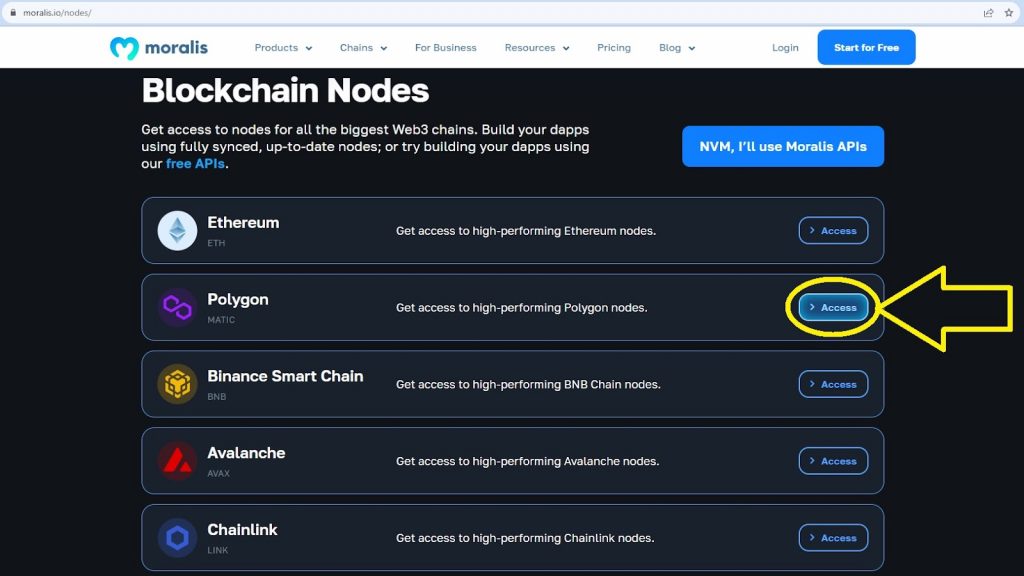
By clicking on “Access,” you’ll be directed to a trustworthy RPC node provider, and to start utilizing the nodes, you must complete the registration process. Simply provide your information and set up an account password. Then, you’ll be able to access an RPC node.
With this user-friendly approach, running a Polygon RPC node becomes a straightforward task. It allows you to harness the power of the Polygon blockchain for your smart contract deployment and on-chain data fetching needs.
Start Developing on Polygon Without Running Nodes
When venturing into Web3 projects, the decision regarding node management can be pivotal. However, you may find yourself in doubt about whether to delve into the complexities of running your own Polygon node or not. If such doubts occur, feel free to use Moralis’s support chat. You can do so by clicking on the Moralis logo discreetly tucked in the bottom-right corner of the screen:

In many scenarios, you can craft robust decentralized applications (dapps) without managing your own Polygon node. Often, you can even avoid using an RPC node provider.
If you look at the Moralis Blockchain Nodes page carefully, you’ll notice the “NVM, I’ll use Moralis APIs” button. The latter signals the path of least resistance – building dapps using Moralis APIs without dealing with nodes.
Embracing Moralis’ suite of Web3 APIs opens the door to bypassing node management entirely. Not only does it save you precious development time, but it also conserves vital resources.
So, if you’re eager to embark on Polygon development or explore other leading EVM-compatible chains without wrestling with node complexities, simply click on the “NVM” button. Alternatively, navigate to the top menu of any Moralis page and explore all available APIs. We’ll do an overview of the Moralis API fleet below.
Use Cases for Polygon Nodes
Polygon nodes have many different use cases. However, generally speaking, they all fall into one of the following three categories:
Network Validation: Polygon nodes are instrumental in becoming network validators. Validators help secure the network, confirm transactions, and ensure the overall stability of the Polygon blockchain. By running a Polygon node, individuals can actively contribute to network consensus and security.On-Chain Data Acquisition: Another significant use case for Polygon nodes is the retrieval of on-chain data. Developers and analysts rely on these nodes to access real-time and historical data stored on the Polygon blockchain. Dapp Development: Polygon nodes provide a reliable infrastructure for dapp developers who need to deploy numerous smart contracts. By connecting to a trusted RPC node, developers ensure seamless interaction with the Polygon blockchain.
Creating Awesome Poylgon Dapps the Easy Way with Moralis Money
Many Web3 developers aim to create innovative and functional dapps. However, many forget that you don’t need a Polygon node to do so.
Moralis APIs are everything you need! They enable you to avoid repetitive tasks and instead focus on the unique features of your dapp. And the best part is that you don’t have to run your Polygon node to build a wide range of dapps, including blockchain explorers, live price feed sites, NFT marketplaces, NFT authentication sites, Web3 wallets, portfolio dapps, and more.
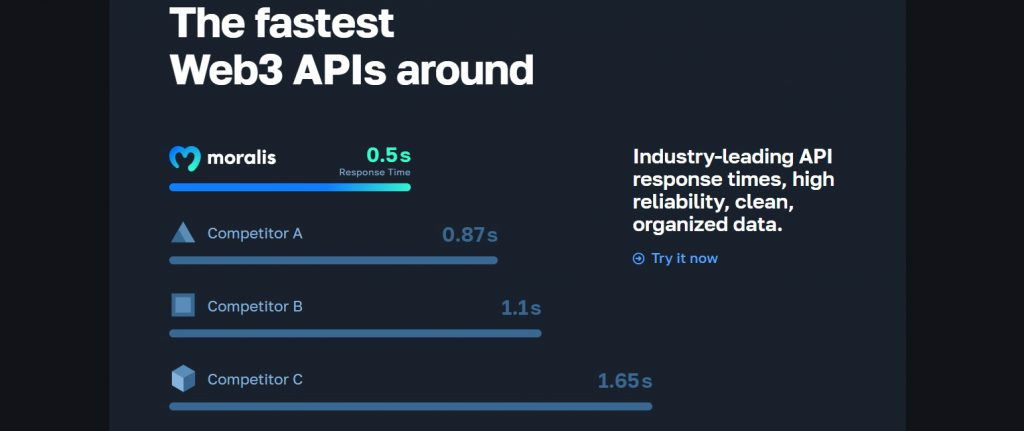
Here’s the current Moralis API fleet that makes dapp development as straightforward as it gets:
Summary – Polygon Node Guide: How to Run a Polygon RPC Node
Throughout the above sections, you first had a chance to learn the basics regarding what a Polygon node is. As such, you now know that a node on Polygon is a computer that runs a special piece of software, which allows it to participate in the Polygon blockchain. Essentially, Polygon nodes are the core building blocks of the Polygon network. They ensure the network’s decentralization, security, and stability and that all general operations run smoothly.
However, the most important part of today’s article was all about how to run a Polygon node. As such, you learned about running Polygon nodes the hard way, the easy way, or even skipping that task altogether. In turn, you now know that the particularity of your Web3 project will determine which path you can take.
But as it turns out, you can cover most projects by using a reliable RPC Polygon node provider. This is where the Moralis Blockchain node page makes a world of difference. It offers you a curated list of RPC nodes for all the leading EVM-compatible chains, including Ethereum node and BSC node providers.
Nonetheless, if you are primarily interested in building a killer dapp on Polygon, you might be able to avoid running a node completely. After all, thanks to Moralis APIs, you can build a wide range of dapps without breaking a sweat or the bank.
Whatever road you take on your Polygon development journey, be sure to first test your applications on the Polygon testnet. To do so, you will need some test MATIC, which you can get via reliable Polygon testnet faucet. Fortunately, you can find one on the Morali faucets page.